
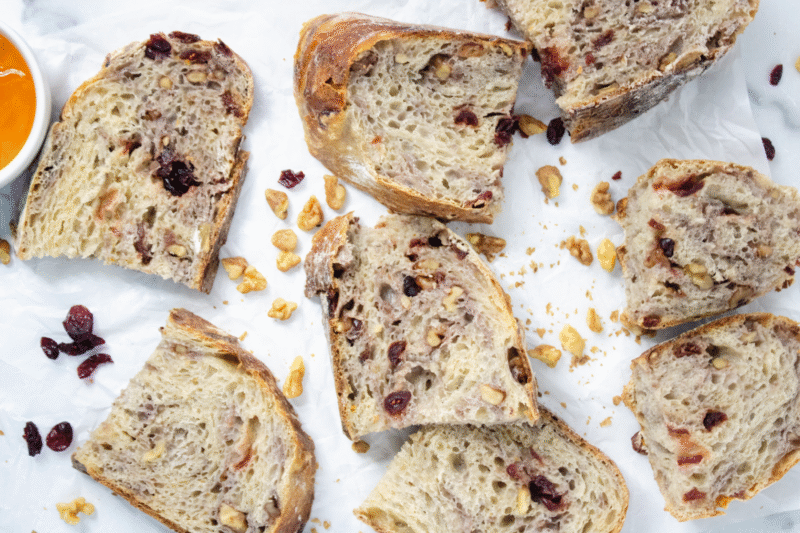
Bright, Tangy, and Nutty Orange Cranberry Walnut Sourdough
I’ve always had a soft spot for a loaf that feels a little bit special, and this bright, tangy, and nutty orange cranberry walnut sourdough checks every box for me. It’s the kind of bread that fills the whole kitchen with the warm, citrusy smell of freshly grated orange zest, and honestly, that alone makes the recipe worth it. I love making it on slower mornings when I’m already in the mood for something cozy and homemade, especially when cranberries and oranges are everywhere.
What makes this loaf such a treat is the balance of flavors. The sourdough gives that gentle tang, the orange juice adds a sunny brightness, and the cranberries bring their sweet-tart pop in every slice. Then you get the walnuts for that lovely little crunch. It’s one of those breads that looks rustic and fancy at the same time, but it’s actually really simple to pull together once you get into the rhythm of stretch-and-folds and long, slow rises. I always feel so proud pulling it out of the oven because it looks like something from a bakery.
I love this bread for breakfast with a little butter or cream cheese, but it’s also amazing toasted in the afternoon with a drizzle of honey. It makes a beautiful holiday gift too because it looks and tastes like winter in loaf form. If you’re ready for a sourdough recipe that’s a little sweet, a little tart, and packed with texture, you’ll have so much fun with this one.
Make sure you also take a look at some of my other bread recipes:

Ingredients
-
75 grams bubbly sourdough starter: This gives the loaf its lift, flavor, and that lovely sourdough tang.
-
75 grams fresh-squeezed orange juice: Fresh juice adds bright citrus flavor and a little natural sweetness.
-
1 tablespoon orange zest: The zest boosts the orange aroma and makes the whole loaf smell amazing.
-
95 grams honey or maple syrup: A touch of sweetness helps balance the tart cranberries.
-
370 grams slightly warmed filtered water: Warm water helps everything mix smoothly and keeps the starter active.
-
250 grams bread flour: This adds strength and helps build a beautiful chewy structure.
-
250 grams all-purpose flour: This keeps the loaf soft while balancing out the bread flour.
-
10 grams sea salt: A little salt enhances all the flavors and strengthens the dough.
-
90 grams dried cranberries: These add sweet-tart pops of fruity flavor in every slice.
-
75 grams chopped walnuts: Walnuts bring a lovely crunch and nutty warmth.
-
1 teaspoon cinnamon: Just a hint of spice ties all the flavors together.

Recipe Instructions
You can find a printable recipe card at the bottom of this post.
1. Combine the water, orange juice, and sourdough starter in a mixing bowl. Stir well with a fork, whisk, or Danish dough whisk, using a kitchen scale for accuracy.

2. Add the bread flour, all-purpose flour, cinnamon, and sea salt. Stir again until everything begins to come together.

3. Use your hands if needed to fully combine the mixture. The dough will look shaggy at this stage.
4. Cover the bowl with a damp towel and let the dough rest for 45 minutes. Set a timer.
5. While the dough rests, soak the dried cranberries in orange or apple juice (or water).
6. For softer walnuts, soak them separately in warm water.

7. After 30 minutes, drain both cranberries and walnuts, then pat them dry. Let them air dry until you’re ready to add them.
8. After the dough has rested for 45 minutes, add the cranberries and walnuts in three additions. Add one-third of the cranberries, then fold the dough over itself about four times to begin incorporating them. Repeat two more times until all cranberries are added. Continue folding for 2–3 minutes until the inclusions are evenly distributed. The dough will feel stiff and sticky.


9. Cover the bowl with a damp towel again and let it rest for 30 minutes.
10. Begin the stretch-and-fold process: With wet hands, grab one portion of the dough, gently stretch it upward, and fold it toward the center. Turn the bowl and repeat until you’ve worked all the way around. This is one full set of stretch and folds.
11. Try to fold the dough in a way that brings most of the mix-ins toward the center. Shape the dough into a loose ball and cover the bowl again.
12. If time allows, perform 3–4 additional sets of stretch and folds, spaced 30 minutes apart, to help develop the gluten structure.
13. Let the dough rise for 6–8 hours or overnight. It should nearly double in size and look soft on top, with small bubbles forming. This completes the bulk rise.


The following day:
1. Lightly flour a baking mat or clean work surface. Turn the dough out onto the surface and gently shape it into a round or oblong loaf. Avoid punching it down so you don’t lose air. Let it rest for 5 minutes.
2. After resting, tighten the dough by gently pulling it toward you on the mat. Repeat from different angles to create tension.
3. Place the dough seam-side up in a towel-lined bowl or a prepared banneton basket.

4. Cover with a damp towel and let it rise for 2–4 hours. This is the second rise.

Prepare for baking
1. Preheat the oven to 450°F with the Dutch oven inside.
2. Once the oven is fully preheated, transfer the loaf to a piece of parchment paper, smooth side up.
3. Score the top of the dough with a bread lame or sharp knife.
4. Carefully lower the parchment and dough into the hot Dutch oven.

Bake the bread
1. Bake for 30 minutes with the lid on.
2. Remove the lid and continue baking for 20–25 minutes, or until the loaf is deeply golden on the top and bottom.
3. Take the pan out of the oven and lift the bread out using the parchment paper.

4. Place the loaf on a cooling rack.
5. Allow the bread to cool completely before slicing.


Serving & Storing
-
Serve warm or toasted: This loaf is especially delicious slightly warmed or toasted with butter, cream cheese, or honey.
-
Pair with sweet spreads: Orange marmalade, cranberry jam, or maple butter taste amazing with the citrusy crumb.
-
Enjoy as breakfast or a snack: It works beautifully for morning toast, afternoon treats, or even a festive brunch table.
-
Store at room temperature: Keep the loaf in a breathable bag or wrapped in a clean towel for up to 3 days.
-
Freeze for longer storage: Freeze whole or sliced, wrapped tightly, for up to 2 months.
-
Refresh before serving: If it feels a little dry after a day or two, warm slices in the toaster or oven to bring it back to life.

Variations
-
Swap the nuts: Try pecans, almonds, or hazelnuts for a different flavor and crunch.
-
Add chocolate chips: A handful of dark or white chocolate makes it taste like a festive treat.
-
Mix in fresh cranberries: Use half fresh and half dried for extra tart bursts throughout the loaf.
-
Try orange extract: Add a tiny splash if you want an even stronger citrus aroma.
-
Use maple syrup only: Maple gives the loaf a deeper, cozier sweetness.
-
Make it spiced: Add nutmeg or cloves if you want it to lean more into holiday flavors.
-
Add seeds: Sunflower seeds or pumpkin seeds give extra texture and a rustic feel.

Substitutions
-
Use bottled orange juice: If you don’t have fresh oranges, bottled juice works in a pinch.
-
Swap honey for maple syrup: Either sweetener gives great flavor, so use what you prefer.
-
Replace walnuts with pecans: Pecans are a softer, sweeter alternative that still adds great texture.
-
Use only all-purpose flour: If you’re out of bread flour, all-purpose flour can work, though the loaf may be slightly softer.
-
Choose dried cherries instead of cranberries: They add a similar sweet-tart flavor with a bit more chew.
-
Use table salt if needed: Just reduce the amount slightly since it’s saltier than sea salt.


Orange Cranberry Walnut Sourdough

This bright and flavorful sourdough loaf is filled with fresh orange zest, sweet dried cranberries, and crunchy walnuts. It has a soft, aromatic crumb with a hint of cinnamon and a gorgeous golden crust. Perfect for breakfast, snacking, or gifting during the holidays.
Ingredients
- 75 grams bubbly sourdough starter
- 75 grams Orange Juice, fresh squeezed (1/3 cup) *1 orange
- 1 tablespoon Orange Zest
- 95 grams Honey or maple syrup (5 tbsp)
- 370 grams filtered water- slightly warmed
- 250 grams of bread flour
- 250 grams all-purpose flour
- 10 grams of sea salt
- 90 grams dried cranberries
- 75 grams walnuts- chopped
- 1 teaspoon cinnamon
Instructions
- Combine the water, orange juice, and sourdough starter in a mixing bowl. Stir well with a fork, whisk, or Danish dough whisk, using a kitchen scale for accuracy.
- Add the bread flour, all-purpose flour, cinnamon, and sea salt. Stir again until everything begins to come together.
- Use your hands if needed to fully combine the mixture. The dough will look shaggy at this stage.
- Cover the bowl with a damp towel and let the dough rest for 45 minutes. Set a timer.
- While the dough rests, soak the dried cranberries in orange or apple juice (or water).
- For softer walnuts, soak them separately in warm water.
- After 30 minutes, drain both cranberries and walnuts, then pat them dry. Let them air dry until you're ready to add them.
- After the dough has rested for 45 minutes, add the cranberries and walnuts in three additions. Add one-third of the cranberries, then fold the dough over itself about four times to begin incorporating them. Repeat two more times until all cranberries are added. Continue folding for 2–3 minutes until the inclusions are evenly distributed. The dough will feel stiff and sticky.
- Cover the bowl with a damp towel again and let it rest for 30 minutes.
- Begin the stretch-and-fold process: With wet hands, grab one portion of the dough, gently stretch it upward, and fold it toward the center. Turn the bowl and repeat until you’ve worked all the way around. This is one full set of stretch and folds.
- Try to fold the dough in a way that brings most of the mix-ins toward the center. Shape the dough into a loose ball and cover the bowl again.
- If time allows, perform 3–4 additional sets of stretch and folds, spaced 30 minutes apart, to help develop the gluten structure.
- Let the dough rise for 6–8 hours or overnight. It should nearly double in size and look soft on top, with small bubbles forming. This completes the bulk rise.
The following day:
- Lightly flour a baking mat or clean work surface. Turn the dough out onto the surface and gently shape it into a round or oblong loaf. Avoid punching it down so you don’t lose air. Let it rest for 5 minutes.
- After resting, tighten the dough by gently pulling it toward you on the mat. Repeat from different angles to create tension.
- Place the dough seam-side up in a towel-lined bowl or a prepared banneton basket.
- Cover with a damp towel and let it rise for 2–4 hours. This is the second rise.
Prepare for baking:
- Preheat the oven to 450°F with the Dutch oven inside.
- Once the oven is fully preheated, transfer the loaf to a piece of parchment paper, smooth side up.
- Score the top of the dough with a bread lame or sharp knife.
- Carefully lower the parchment and dough into the hot Dutch oven.
Bake the bread:
- Bake for 30 minutes with the lid on.
- Remove the lid and continue baking for 20–25 minutes, or until the loaf is deeply golden on the top and bottom.
- Take the pan out of the oven and lift the bread out using the parchment paper.
- Place the loaf on a cooling rack.
- Allow the bread to cool completely before slicing.
Notes
- Soaking the cranberries and walnuts helps keep the loaf soft and prevents the dough from drying out.
- This dough will feel sticky, which is totally normal for a fruit-and-nut sourdough. Wet hands make it much easier to handle.
- If your kitchen is cool, the bulk rise may take a little longer, so keep an eye on the dough rather than the clock.
- Let the loaf cool completely before slicing to keep the crumb from becoming gummy.
- For extra citrus flavor, add a little more zest or a splash of orange extract.