
How Technology Solutions Empower Architecture and Engineering Businesses
In the world of Architecture and Engineering (A&E), where precision can mean the difference between grand success and catastrophic failure, technology stands as the silent transformer. As we march further into the 21st century, innovators within this esteemed domain are increasingly relying on cutting-edge technological solutions. This isn’t technology for technology’s sake; it’s the kind that equips professionals with the power to create, analyze, and execute with unparalleled depth and efficiency. Our discussion today revolves around the invaluable ways in which technology is brimming with the potential to amplify the capabilities and creativity of A&E firms. The A&E industry, known for its large-scale projects and intricate designs, has historically been a bastion of manual labor guided by artistry and handbook methodologies. However, this landscape is rapidly changing, with digital tools carving out a niche for accelerated growth and innovation.

Advanced Firm Management Platforms
This is where advanced firm management platforms come in. Imagine a one-stop digital dashboard where project timelines, staffing, billing, and operational analytics converge seamlessly. These platforms are designed to enhance a firm’s overall productivity and strategic planning, automating routine tasks that once consumed precious man-hours. From platforms like Factor A/E to those that focus on specific industries, there is no shortage of options to streamline processes and improve workflow. The result? Projects are completed faster, with fewer errors, and at lower costs. The suite of tools fosters collaboration and transparency, equipping A&E managers with real-time insights for informed decision-making. As a result, businesses witness a tangible boost in project delivery, client satisfaction, and ultimately, their bottom line.
Building Information Modeling (BIM)
Unlike its predecessor, Computer-Aided Design (CAD), BIM isn’t merely about crafting pretty 3D models. It’s a sophisticated information management system that provides a digital representation of the physical and functional characteristics of a facility. Through BIM, professionals can simulate a construction process before the actual groundwork begins. This includes components such as architectural design, structural calculations, and mechanical, electrical, and plumbing systems. The predictive nature of BIM doesn’t just reduce the likelihood of design errors; it also sets the stage for efficient resource allocation and smarter project management.
AI-based Design Tools
The integration of Artificial Intelligence (AI) in the A&E sector is akin to welcoming an omniscient, omnipresent design assistant. AI has the potential to analyze complex data sets and propose design solutions tailor-made to meet specific criteria. Design parameters, such as structural integrity, energy efficiency, and cost-effectiveness, can be mastered with unprecedented speed and precision. Leveraging the generative design capabilities of platforms like Autodesk’s Generative Design, engineers can explore a myriad of design options, letting the AI’s algorithms sift through innumerable possibilities. The result is a human-AI collaboration that conceives solutions that might have eluded a team sifting through conventional design processes.
Sustainable Energy Modeling
Engineering solutions have never been as pivotal to global conversations on sustainability and environmental impact as they are today. With regulation and client demands leaning heavily towards green technology, A&E firms are looking towards technology to model sustainable energy solutions. Software like Integrated Environmental Solutions (IES) allows architects to predict a building’s energy consumption and assess potential renewable energy strategies. By virtually validating these strategies pre-construction, A&E professionals present their clients with empirical data, reinforcing the viability and impact of green technologies within the proposed architecture.
Virtual Reality (VR) Technology
For clients and stakeholders, visualizing a project is key to understanding, amending, and approving designs. This is where VR technology is a game-changer. By immersing users in a virtual world, VR creates an experiential canvas where they interact with and obtain a ‘feel’ for the proposed architecture. Engines like Unity and Unreal Engine are increasingly finding applications in creating VR experiences for A&E projects. The interactivity and chance to explore every facet of the design empower clients to make more informed decisions. Not to mention, it’s an impressive marketing tool that lets A&E firms showcase their avant-garde designs in a medium that is both accessible and captivating.
Cloud Computing
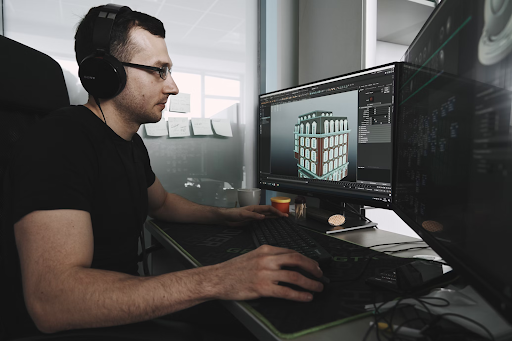
The inherent scalability and collaborative prowess of cloud platforms have shifted the ground beneath traditional project management structures. With the cloud, architects and engineers can access and work on the same project files from any location with internet access, transcending geographical barriers. Autodesk’s BIM 360, for example, caters to the mobile workforce of today, enabling real-time collaboration across design and construction teams. As changes are made to the BIM design, they’re instantly reflected and available to all stakeholders, ensuring that there’s never a version control issue that stalls project progress.
In closing, the infusion of technology in the A&E industry isn’t a fleeting trend—it’s the blueprint for the future. A future where architects and engineers aren’t fettered by the limitations of contemporary tools, but rather propelled by the limitless possibilities offered by their digital counterparts. It’s an exciting rendezvous between the arts and the sciences, forging paths towards more creative, sustainable, and efficient structures. For A&E businesses, the directive is clear: adapt, adopt, or be left behind in the steady march of technological progress. Those who choose to harness the power of these technological marvels are set to carve out a legacy that stands tall, quite literally and figuratively, in the annals of history.


