
How To Get Started In The Construction Industry
Construction careers may be extremely gratifying for the appropriate person. With a well-known, friendly work atmosphere and each day presenting a new challenge, many people find success in this field of employment.
Builders received the greatest pay increase of any industry in 2015, winning an average of a staggering 10.2 per cent wage increase. This means that, in addition to an interesting and challenging job, the construction industry also offers a fantastic salary package
The growing awareness of the industry’s many advantages comes as no surprise, given the growing interest in the subject in the past few years. Fortunately, no matter your age or level of expertise, there are numerous methods to get started in a career in construction. Continue reading to learn more about how you may get your foot in the door in the industry.
Apprenticeships
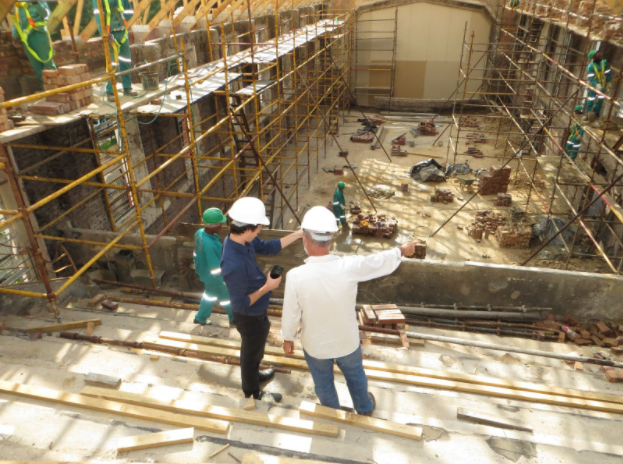
If you are between the ages of 16 and 24, an apprenticeship may be the most straightforward path to breaking into the field. As part of your paid work, where you will gain insight and experience into all aspects of the industry, you will be reimbursed for your college courses and other relevant accreditations and learning, ensuring that at the end of your apprenticeship you are a fully-fledged construction worker qualified for any number of jobs on the market.
However, if you are over the age of 24, you can still pursue an apprenticeship. Unfortunately, financing for adult apprenticeships is much more limited, and it is probable that you will be required to fund your own learning. More information about this can be found by asking around at your local colleges.
Education and training in the future
Degrees in the construction sector can be quite beneficial, whether you are continuing your apprenticeship to a university-level or simply taking the next step after completing your A levels. Obtaining one of the various construction-related degrees available will allow you to adapt your talents to fill roles such as construction manager, which will provide you with more responsibility and a larger earning potential.
You can use a non-construction degree to your advantage if you have a strong marketing, business, or information technology background. You may also need to complete a construction conversion degree to make the transition from one field into another easier, but this is not required.
Accreditations
In the event that you have already had any building experience in the past, you may be able to increase your employability by becoming accredited for any abilities you may possess. Whether you are skilled at operating a construction plant or putting up scaffolding in a safe manner, if you have received training, you can earn your accreditation. It is still possible to complete these training courses and earn some certifications even if you have no prior experience. Whether you fund the training yourself or look for bursaries or schemes to assist you in covering the costs, having industry-tested skills will undoubtedly help you land your first job and open the door to a more rewarding career path ahead. One thing you will need is a CSCS card to prove that you understand safety on a construction site. You can Book Your CSCS Test Online.
Experience
Lastly, volunteering or doing work experience is a good option for getting some insight into the industry and learning some of the basic skills. However, without the relevant training and health and safety awareness, there will be a restriction on how involved you can be.
The experience you get will look well on your CV, and it is possible that you may impress your employer to the point where they will offer you a position in the company, an apprenticeship, or another route into the field.
*This is a collaborative post.
