
The Different Types of Plastic Manufacturing Techniques
Plastic has become a very useful and adaptable material in the world of manufacturing. Plastic is omnipresent in our lives, appearing in everything from simple consumer goods to intricate industrial parts. These varied products are made possible by a variety of plastic manufacturing processes that work behind the scenes. We will examine the many plastic production techniques and their distinct applications, advantages, and processes in this in-depth blog post.

Injection Molding
Injection molding is a highly versatile and widely utilized plastic manufacturing technique that has revolutionized the mass production of intricate and detailed plastic components. The process involves injecting molten plastic material into a carefully crafted mold cavity, allowing it to cool and solidify. The precision and repeatability of injection molding make it an ideal choice for producing a vast array of products, ranging from small and intricate consumer goods to large and complex automotive parts. The ability to achieve tight tolerances and intricate designs sets injection molding apart, making it a go-to method for industries where precision and consistency are paramount. The efficiency and speed of this technique contribute to its popularity for large-scale production, enabling manufacturers to meet high demand while maintaining cost-effectiveness. As technology continues to advance, innovations in materials and machinery further enhance the capabilities of injection molding, ensuring its continued prominence in the plastic manufacturing landscape.
Blow Molding
Moving on, blow molding is a technique specifically tailored for hollow objects such as bottles, containers, and tanks. The process begins with the formation of a hollow tube, which is then blown into the shape of the desired product. This technique is not only efficient but also environmentally friendly, making it a popular choice in the packaging industry.
Structural Foam Molding
One notable technique within the realm of plastic manufacturing is structural foam molding. This method involves injecting a foaming agent into the plastic material, creating a cellular structure within the product. The advantages of structural foam lie in its ability to produce lightweight, rigid, and cost-effective parts with enhanced strength. This technique is particularly well-suited for large, thick-walled parts where weight reduction is crucial without compromising structural integrity.
Extrusion Molding
Extrusion molding involves pushing molten plastic through a die to create a continuous profile or shape. This technique is commonly used in the production of pipes, tubing, and various profiles for construction and industrial applications. Extrusion molding’s efficiency and ability to produce continuous lengths of plastic make it a cost-effective solution for specific manufacturing needs.
Rotational Molding
The process begins by introducing a predetermined amount of powdered resin into a mold, which is then heated and rotated in an oven. As the mold rotates, the plastic coats the interior, gradually taking the shape of the mold. This rotation ensures uniform distribution of the material, resulting in products with enhanced strength and durability. Once the plastic has evenly coated the mold, it is cooled to solidify, and the finished product is extracted. Rotational molding is particularly favored for its capacity to produce large and complex items without the need for costly tooling. This technique finds applications in various industries, ranging from manufacturing large containers and tanks to creating playground equipment and automotive components. Its versatility, cost-effectiveness, and ability to produce seamless structures make rotational molding a compelling choice in the realm of plastic manufacturing.
Thermoforming
Thermoforming is a versatile plastic manufacturing technique suitable for producing a wide range of products, including packaging, automotive components, and consumer goods. It involves heating a plastic sheet until it becomes pliable, then forming it over a mold using vacuum pressure or direct mechanical force. Thermoforming provides a cost-effective solution for both prototype development and large-scale production.
Compression Molding
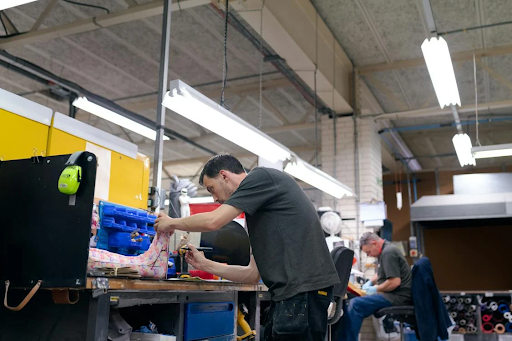
Compression molding is a widely utilized plastic manufacturing technique recognized for its ability to produce high-strength and intricately shaped components. In this process, a pre-measured amount of plastic material, typically in the form of a powder or preform, is placed into a heated mold cavity. The mold is then closed, and pressure is applied to compress the material, causing it to flow and take the shape of the mold. This method is particularly advantageous for manufacturing complex and large parts, making it a preferred choice in industries such as aerospace, automotive, and electronics. Compression molding stands out for its cost-effectiveness, as it allows for the production of parts with consistent quality and minimal material waste. Additionally, the technique’s suitability for a diverse range of thermoplastic and thermosetting materials further enhances its versatility, making it a valuable player in the ever-evolving landscape of plastic manufacturing.
The world of plastic manufacturing is a diverse landscape encompassing various techniques, each tailored to specific applications and requirements. From the precision of injection molding to the versatility of thermoforming and the unique advantages of structural foam, these techniques collectively contribute to the production of countless products that shape our daily lives. As technology advances, it is certain that the plastic manufacturing industry will continue to evolve, bringing forth even more innovative and sustainable solutions for the future.